Quick summary
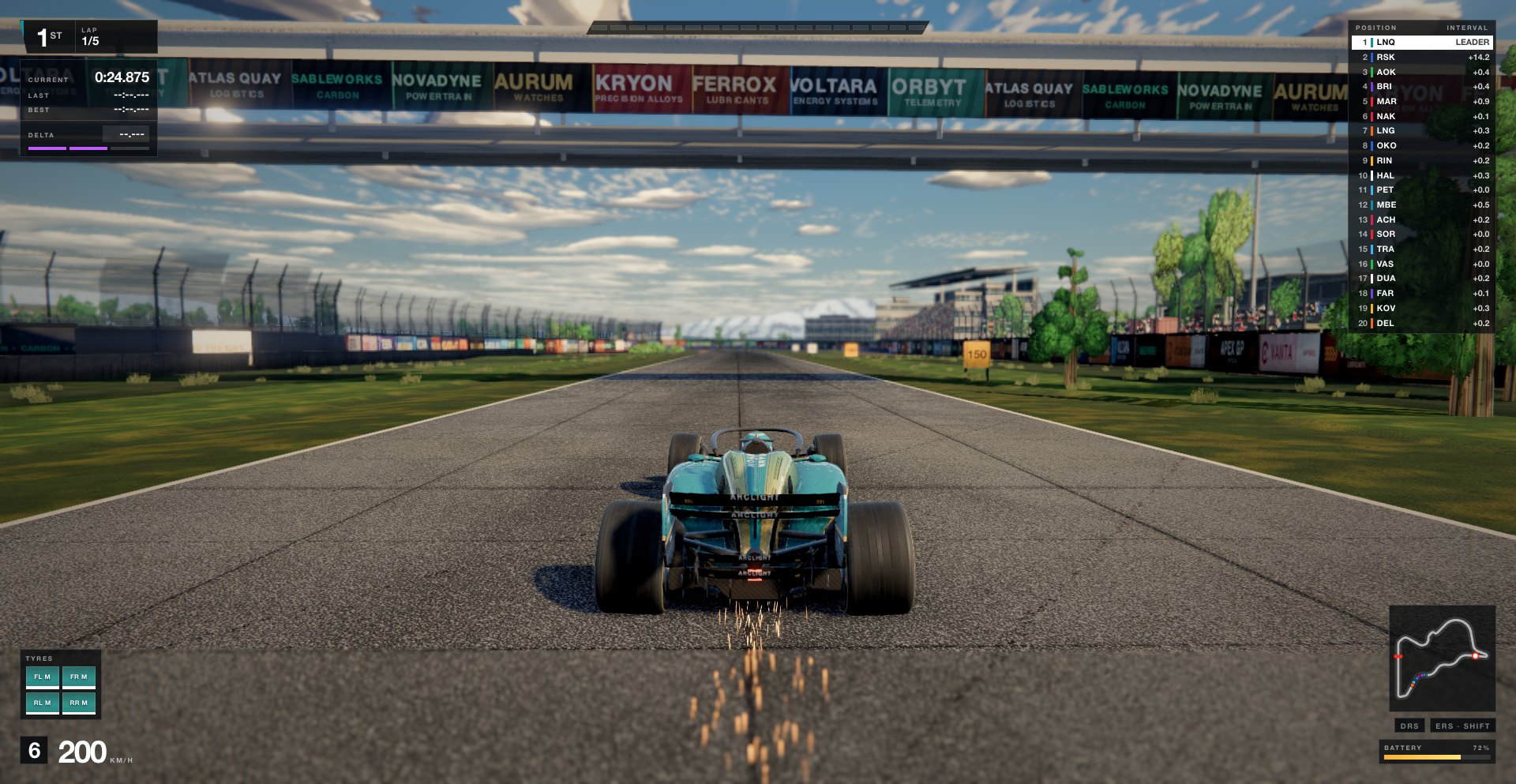
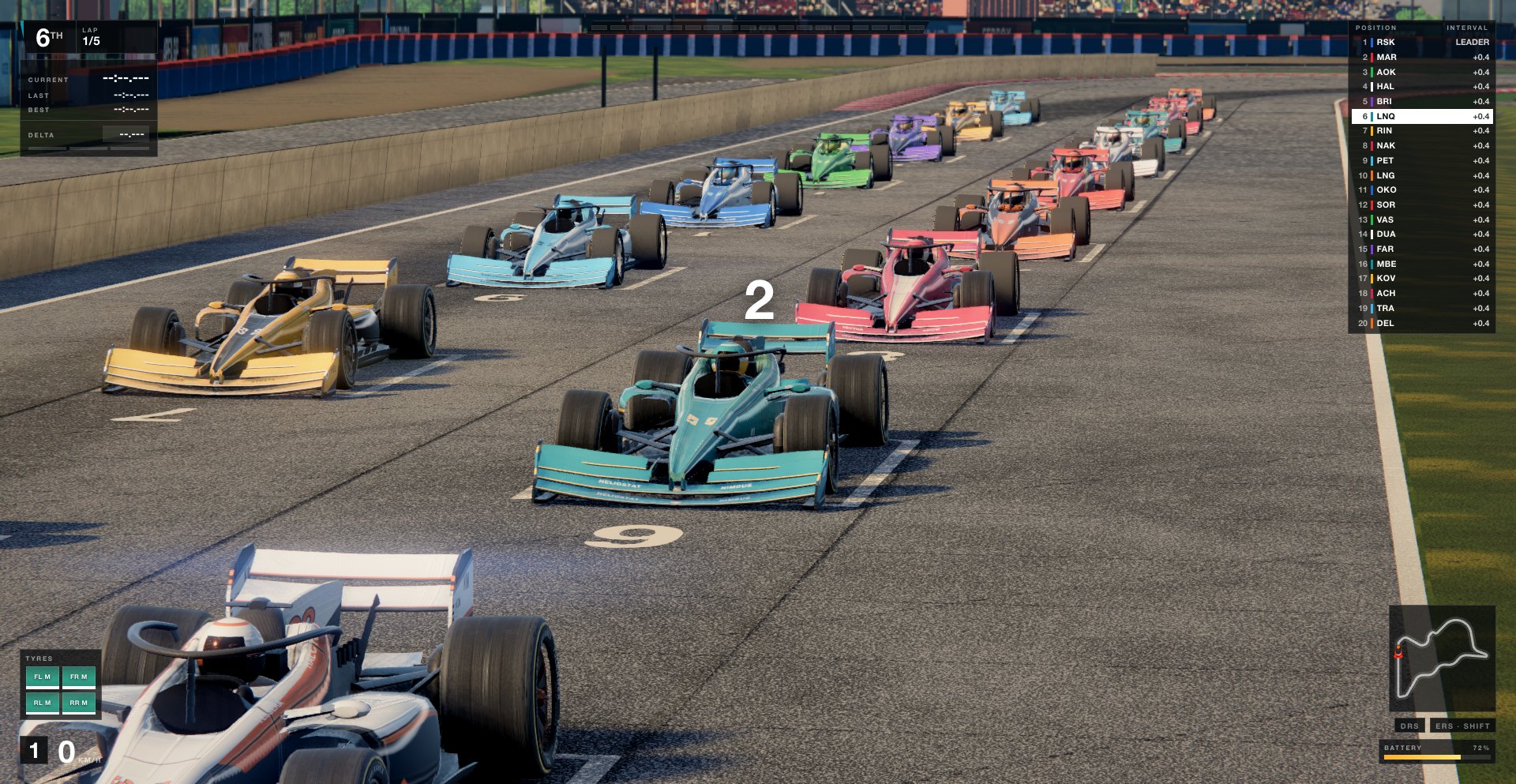
Apex Grand Prix is a full race weekend in a browser tab. Twenty cars line up on a five-kilometre permanent road course with sixteen named corners, three DRS zones, and a pit lane that works. You qualify nothing and start anyway, and the field races you properly. Under the broadcast overlay (position tower, sector timing, delta, tyre temperatures, and battery) sits a real vehicle model. It runs a fixed 240 Hz physics step behind an accumulator, with per-wheel load transfer, tyres that heat and wear, and driver aids you can switch off one at a time until the car is yours to lose.
Who this template is for
Apex Grand Prix is a racing simulation that happens to run in a browser tab. It’s for people who want proof that the web can carry a real vehicle model and a full television presentation instead of a car sliding along a ribbon of road.
- Studios and agencies who need a playable set piece in the portfolio, one that stands up to being driven
- Developers who want a real-time vehicle model wired to a renderer instead of sitting in a notebook: fixed-step physics, load transfer, and a tyre curve with heat and wear
- Brands who want a branded circuit or a liveried car that opens from a link. There’s nothing to install and nothing to license
What problem this template solves
Most “browser games” on offer are either heavy engine exports or toy demos that fall apart the moment you look under the hood. This build is neither.
- Engine exports ship megabytes of runtime before the first frame ever draws
- Toy demos skip the hard parts: real collision, game states, difficulty curves, and persistence
- Builders who want to learn from a finished game almost never get to see the instructions that produced it
What you get with this template
You get a full race weekend: a five-kilometre road course with sixteen corners, twenty cars running the same physics, a working pit lane and DRS, and a broadcast overlay that reads from the model instead of approximating it.
- A vehicle model at a fixed 240 Hz behind an accumulator, so the car handles the same at any frame rate. It has ABS, traction, stability, auto gears, and two driving aids you can switch off one at a time
- A procedurally generated circuit. The road mesh, kerbs, run-off, barriers, grandstands, crowd, and trackside furniture all derive from the centreline, so the whole track can be changed in one place
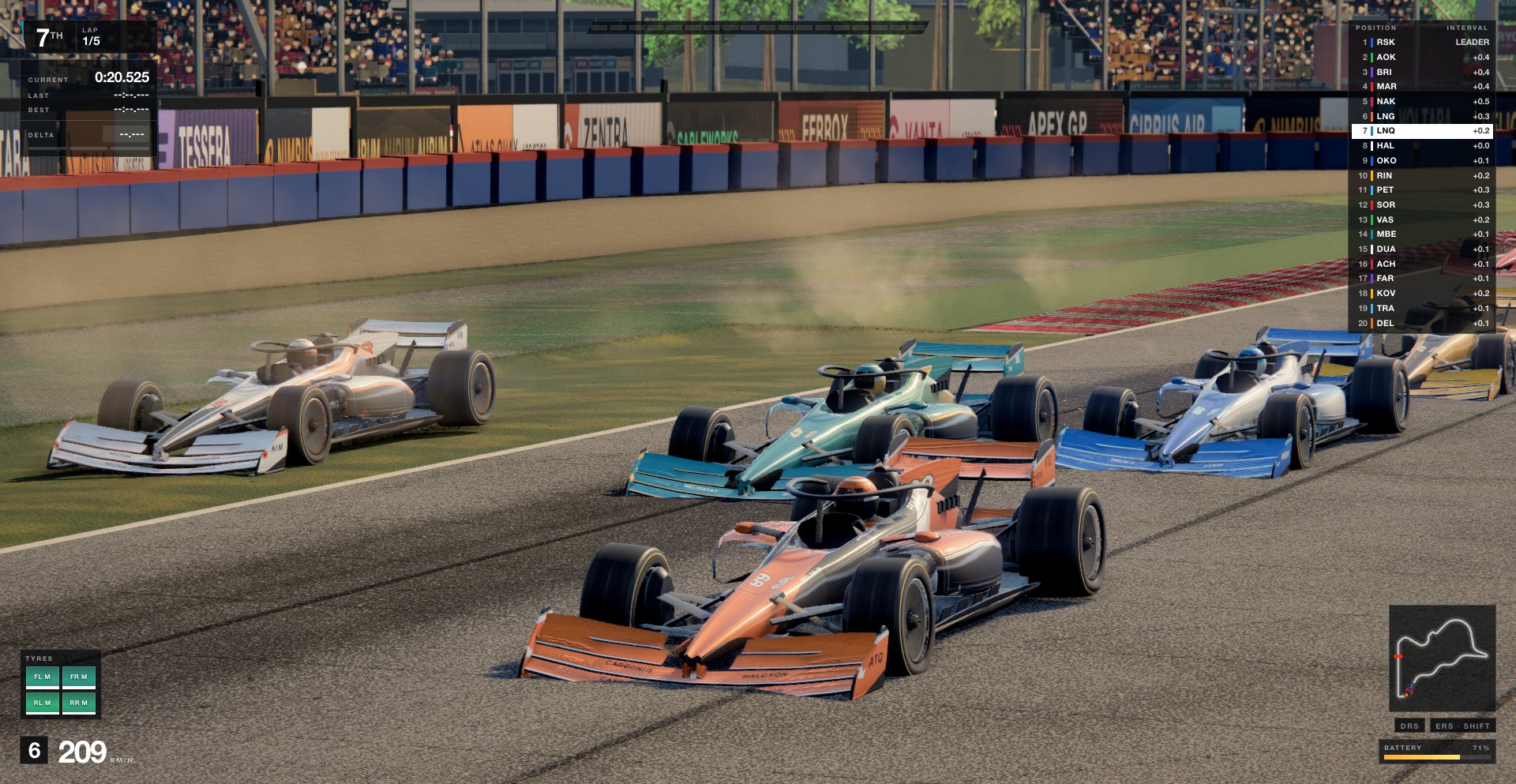
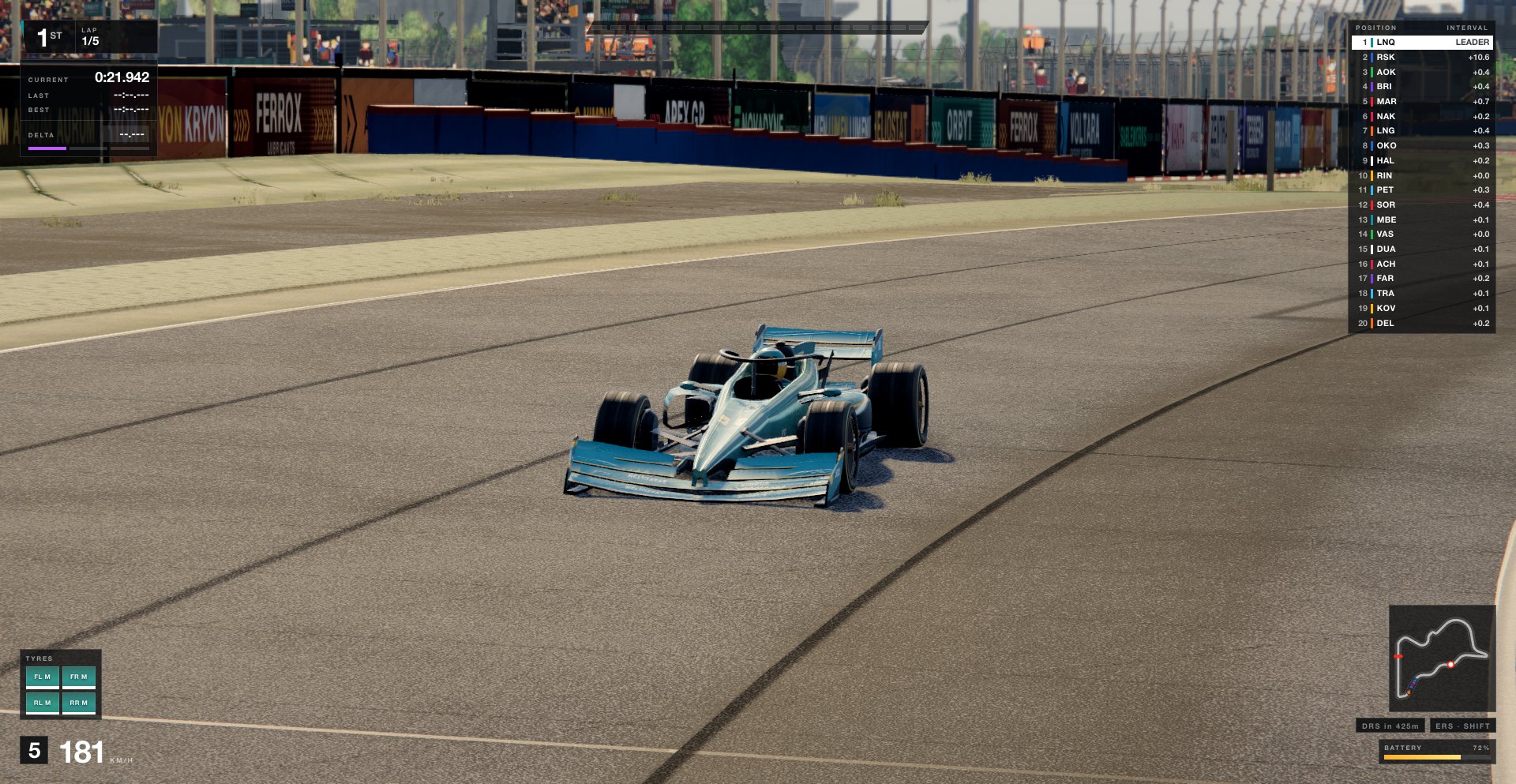
- A broadcast layer with a position tower, sector timing, delta, tyre temperatures, battery, DRS, and a minimap, all checked against the model by a QA suite that drives a full five-lap race
Page sections overview
| Section | Purpose |
|---|---|
| Zero binary assets | Draw every texture and synthesise every sound at boot, so the build ships as code |
| Fixed-step vehicle model | Make the car behave the same on every machine, then let the render catch up |
| A field that races | Give nineteen rivals the same physics you drive, and no rails to hide behind |
| Broadcast presentation | Build the television layer from the model, so the numbers on screen are the real ones |
| A gate that has to pass | Hold the build to thirty-five suites and eleven measured image metrics |
Design and branding system
The art direction is a daylight television broadcast: neutral grade, long lenses, and a car that stays readable against a bright circuit.
- Cascaded shadow maps with a blocker-search softening pass. Contact shadows stay tight under the floor and distant ones go soft, so the car sits on the track instead of floating
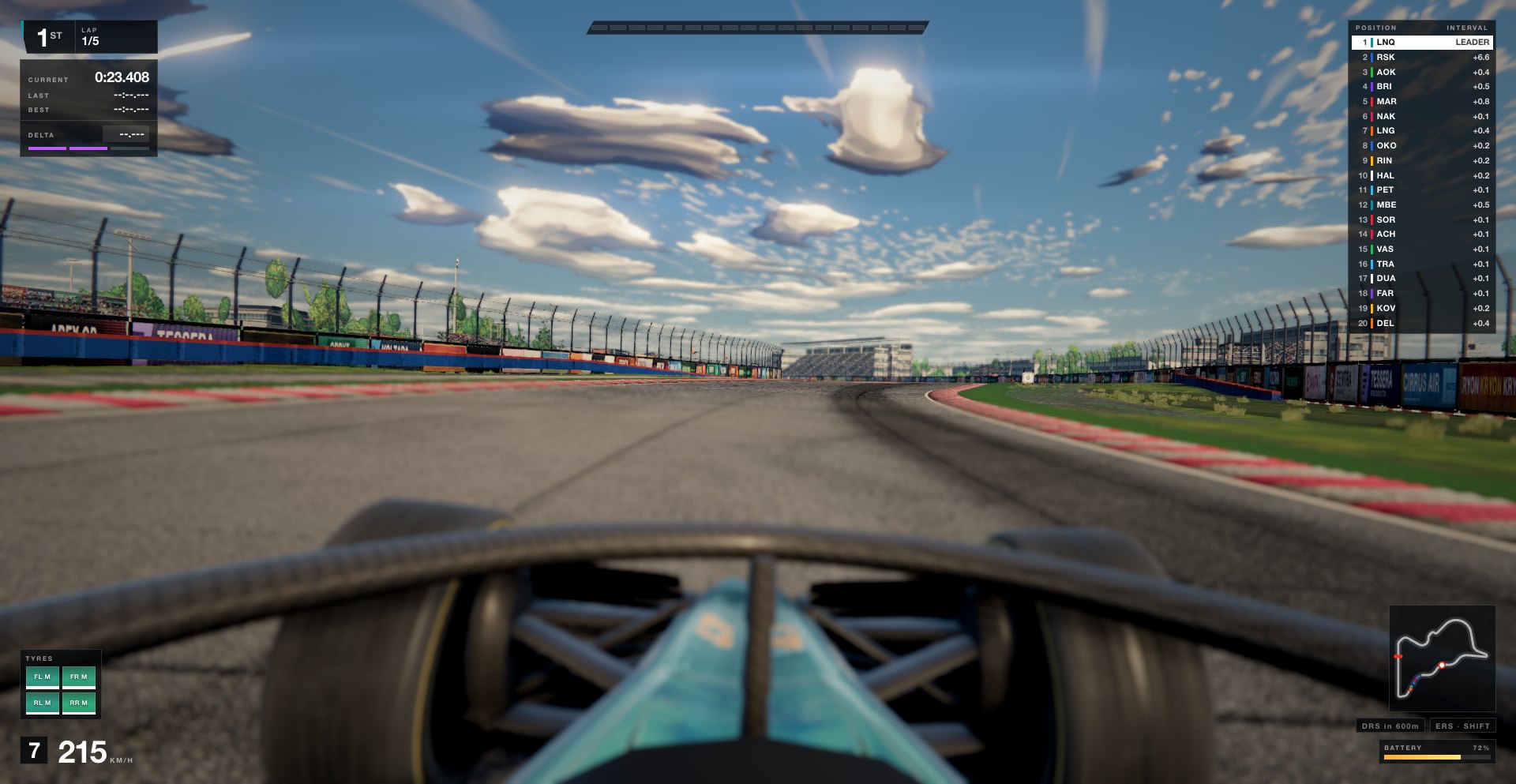
- A camera director with television, chase, cockpit, halo, and bonnet modes, framed the way a race broadcast frames a car, where a game camera would just follow one
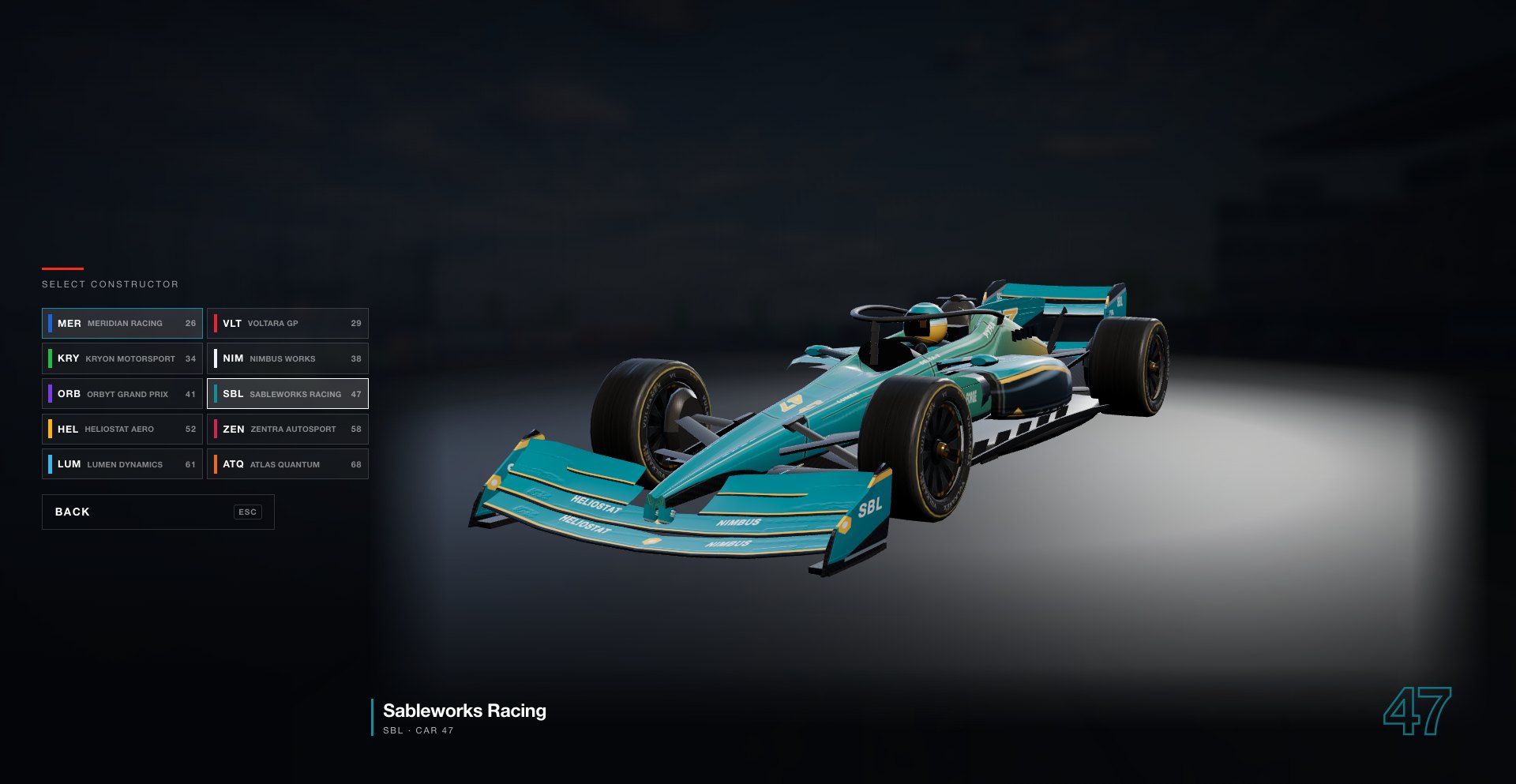
- Ten invented constructors with their own liveries, colours, and three-letter codes, on an invented circuit. Nothing on this grid is licensed from anybody
Mobile and speed optimization
The game targets desktop first, with keyboard and mouse as the primary controls. It stays light enough to load instantly anywhere.
- There’s no engine runtime and no asset downloads, so the whole game arrives in a handful of requests
- A capped frame delta keeps the simulation stable even when the browser tab stutters or loses focus
- The page stays lean, with no frameworks or trackers between the visitor and the game loop
How this template helps you convert
A playable game holds attention longer than any showreel. The page around it is built to turn that attention into a next step.
- Visitors play right away, with no signup, download, or install before the first round
- The finished build is fully inspectable, which turns curious players into builders who want the prompt behind it
- Paying once for the prompt is a small, concrete next step while the session is still hot
Other information about this template
Apex Grand Prix is a simulation first and a showpiece second. A few notes before you build on it.
- A keyboard is all it needs. WASD or the arrow keys drive it, and the driving aids are tuned so a first-time player can complete a lap
- Everything ships as static files: vanilla ES modules on an import map, with no bundler, no build step, and no server
- The circuit, the car, the tyre model, the camera director, and the post chain are separate systems meeting through one shared context, so any of them can be replaced without touching the others
- It’s fill-rate bound, and the CPU isn’t the limit. The quality row moves the framebuffer, which is the lever that buys frames on a slower machine
How it works
Apex Grand Prix is vanilla ES modules on an import map, with no engine, no bundler, no build step, and no binary assets at all. Every texture on the circuit is drawn procedurally at boot with Canvas2D and noise, and every sound is synthesised in WebAudio. The car, the sky, the tyre model, the camera director, and the post chain are separate systems that only meet through one shared context object. The cinematic look comes from a post stack of cascaded shadow maps with a PCSS softening pass, ambient occlusion, motion blur, depth of field, bloom, and a graded display transform. Every screenshot on this page can be reproduced from the build’s own QA setup, and nothing ships until it passes thirty-five suites and eleven visual metrics.
Screenshots
Captured from the live build: the title screen, then gameplay, level by level.