Ask anyone who has organised a wedding what the hard part was, and they rarely say the ceremony. It’s the guest list. Invitations go out over chat, RSVPs come back as a thumbs-up emoji or not at all, and someone keeps a spreadsheet that’s out of date the day it’s made. Three months after the event, the photos are still sitting in a photographer’s transfer link that expired last week.
The brief was to put all of that on one link. A guest receives an invitation that looks designed, with the couple’s names, their colours, their story, the venue, and the schedule. They answer the RSVP on the same page. The couple watch responses arrive in a dashboard instead of a group chat. After the wedding, the same link delivers the real photos, privately, to the people who were there.
One more requirement made it a platform rather than a website: it had to be multi-tenant. The economics of a one-off wedding site are terrible, because every couple needs one for a single day. But a venue hosts weddings every week. Build it so each wedding is its own tenant with its own guests, media, and settings, and the same build serves every event the venue ever hosts. That’s what I built: the machine that produces wedding websites.
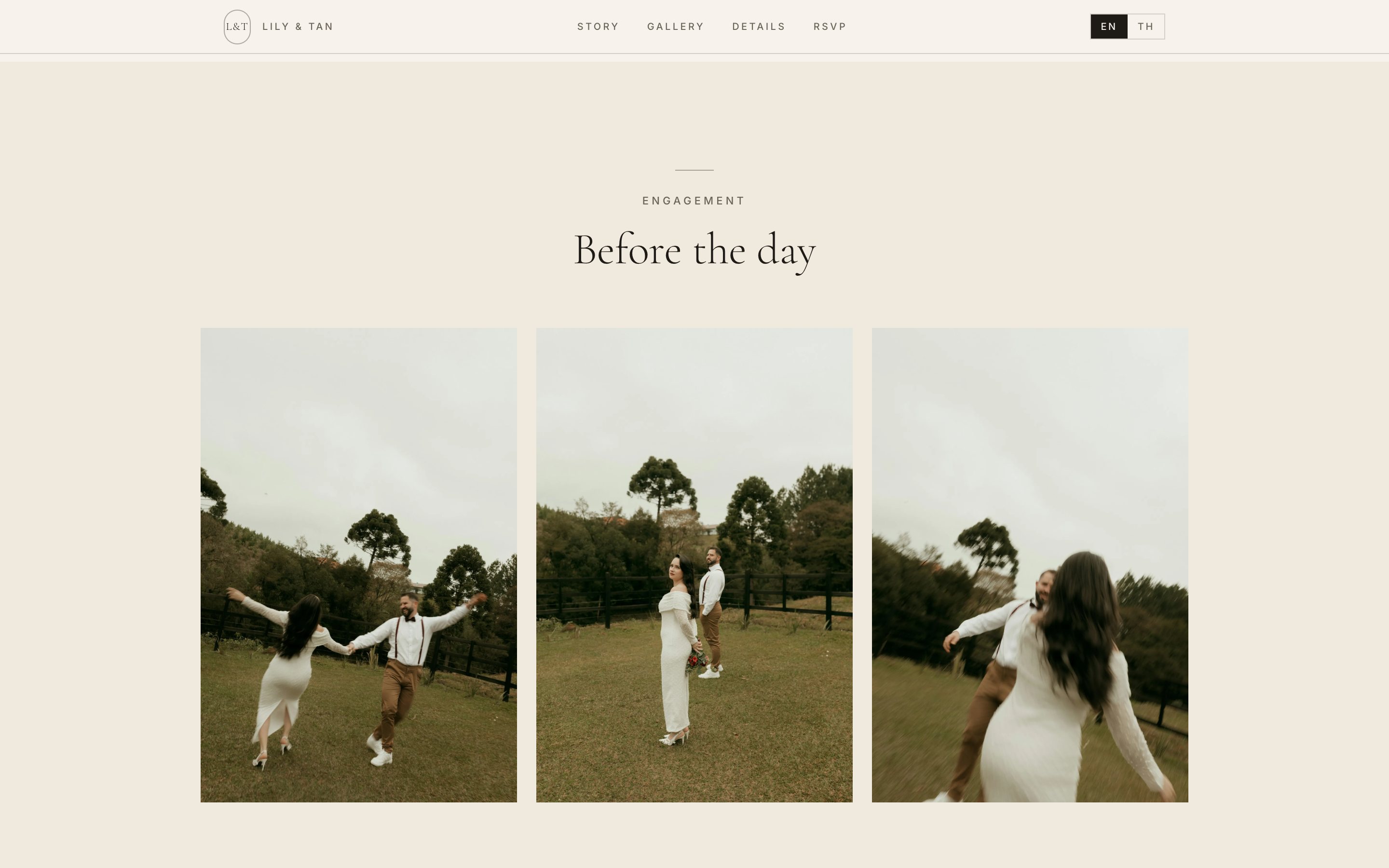
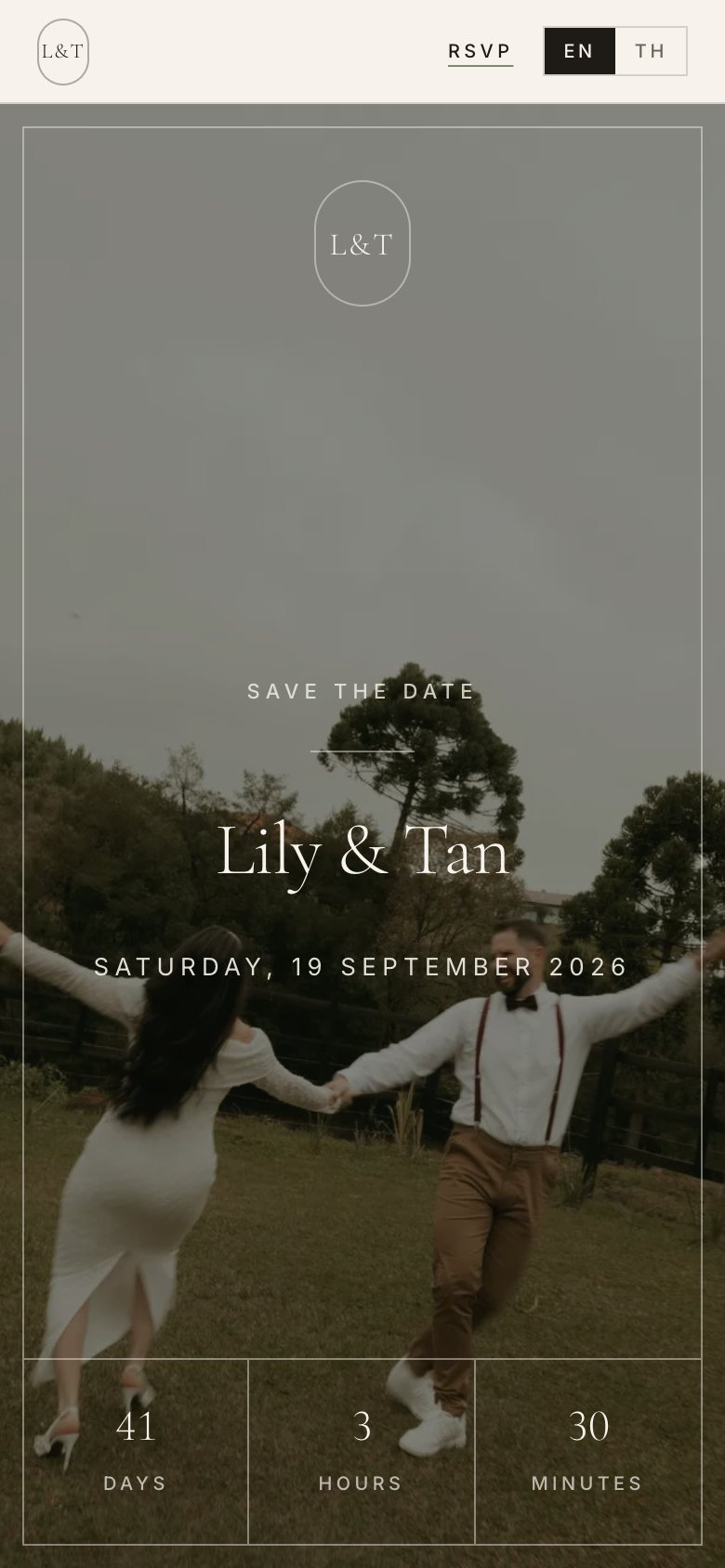
The public demo, Lily & Tan at The Garden House, Bangkok, is tenant number one. It runs on the production system in English and Thai, with a real guest list, real RSVPs, and a real gallery.